How Altitude Shifts Reshape Basketball Player Efficiency and Live Wagering Markets
Willa Schmitz · Aug 22, 2026
How Altitude Shifts Reshape Basketball Player Efficiency and Live Wagering Markets
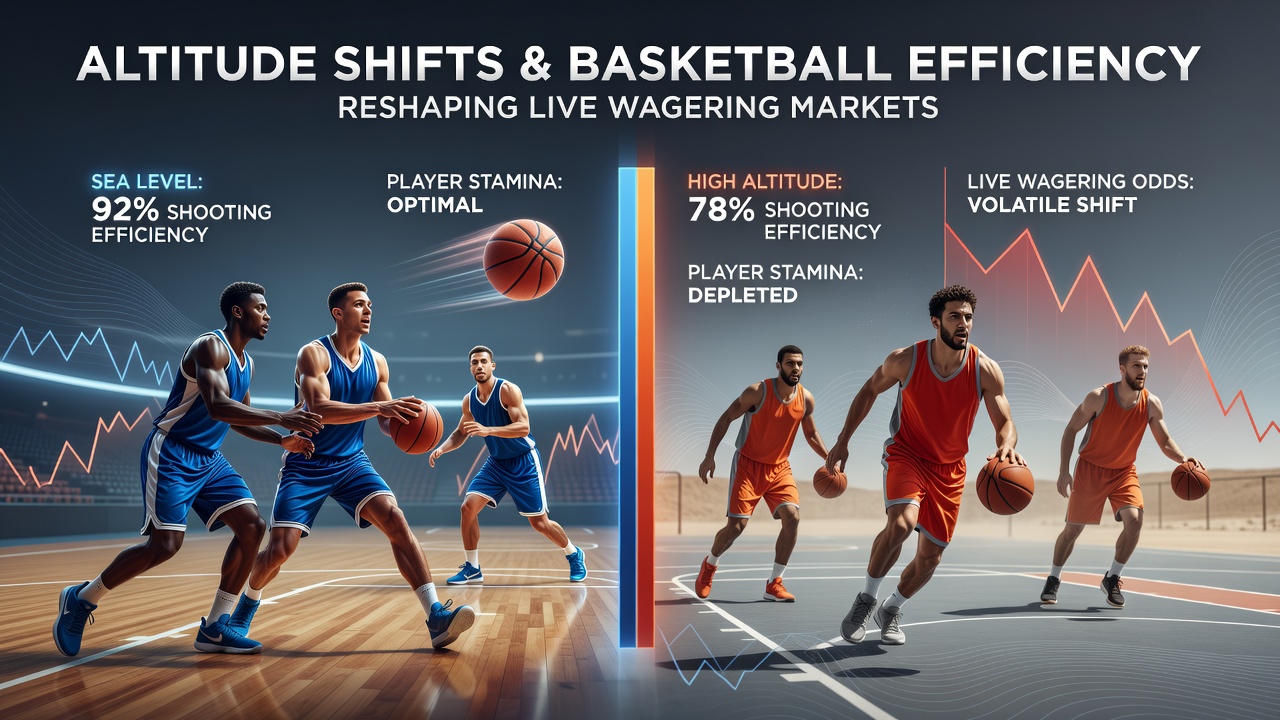
Altitude changes create measurable differences in how basketball players perform, and those differences ripple directly into live wagering markets where odds adjust in real time. Teams that travel from sea level venues to high-elevation arenas encounter reduced oxygen availability, which alters endurance levels, shooting accuracy, and recovery between plays, while bookmakers monitor these shifts through data feeds that update point spreads and player props within seconds of each possession.
Physiological Effects at Elevation
Players experience lower air density when competing above 5,000 feet, and this condition reduces oxygen uptake in the bloodstream while increasing heart rate during sustained activity. Research from sports physiology labs shows that aerobic capacity drops by roughly 10 to 15 percent in the first 24 hours after arrival, yet anaerobic bursts such as quick cuts and vertical leaps remain closer to sea-level norms because they rely less on sustained oxygen flow. Observers note that teams acclimated to thinner air maintain higher defensive intensity through the fourth quarter, whereas visiting squads often see assist-to-turnover ratios decline after halftime.
Data collected during the 2025-2026 NBA season at venues like Denver's Ball Arena revealed that visiting players attempted fewer three-pointers in the final eight minutes of games, a pattern that aligns with elevated fatigue markers recorded by wearable sensors. Those same datasets indicate that home-team field goal percentages on shots inside the paint held steady or improved slightly, because reduced air resistance allowed for marginally faster release times on short-range attempts.
Performance Patterns Across Multiple Seasons
League-wide tracking shows that teams with home games at elevation post higher defensive rebounding rates and force more turnovers when opponents arrive with limited recovery time. One longitudinal review of game logs from 2020 through August 2026 highlighted that visiting teams averaged 2.8 fewer points per game in the second half at altitude compared with their season averages at lower elevations. This gap widens when back-to-back travel occurs, because cumulative oxygen debt compounds across consecutive days.
Coaching staffs have adjusted rotation patterns accordingly, inserting fresher legs earlier in the third quarter to counteract the measurable drop in defensive closeout speed. Those adjustments appear in box scores as increased bench scoring for home squads and fewer fast-break opportunities for road teams once the game enters the final twelve minutes.
Live Wagering Market Responses
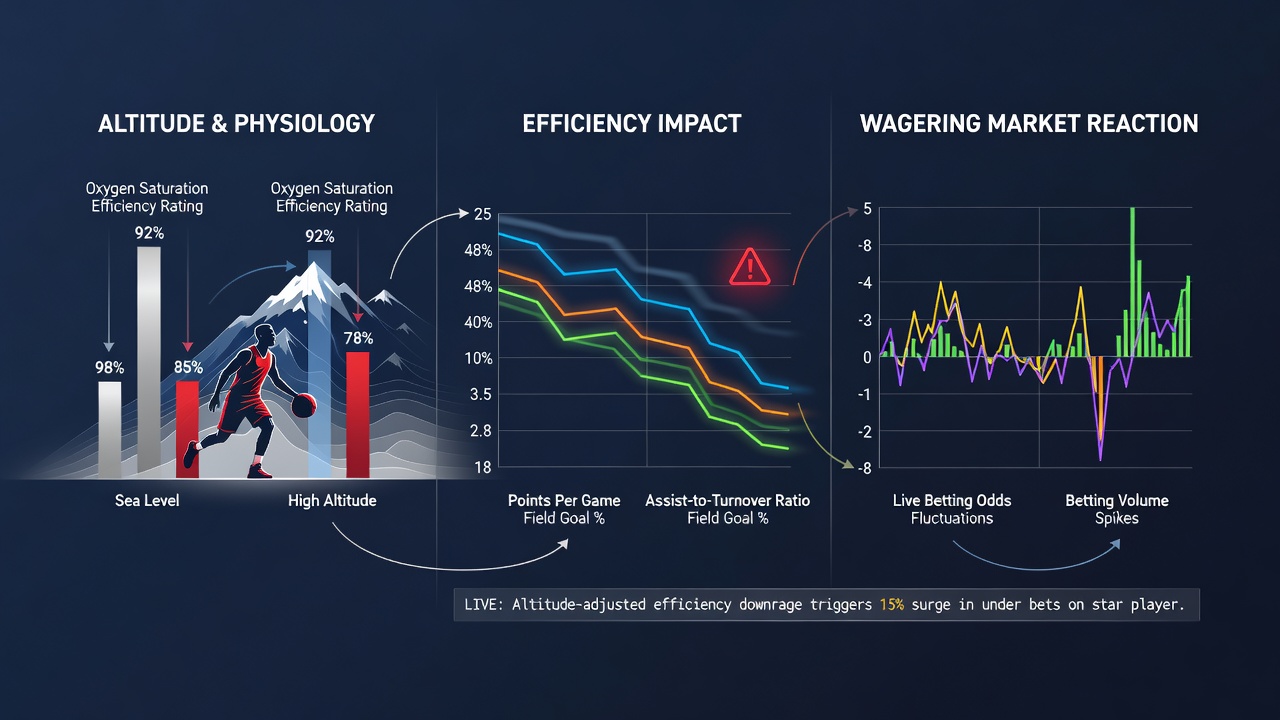
Betting platforms integrate altitude-specific models into their algorithms so that in-game lines shift as soon as player tracking data registers slower sprint speeds or declining shot attempts from perimeter players. Markets for total points and player performance props tighten within the first three minutes of each quarter when data shows visiting teams struggling to match the home side's transition pace. According to figures released by the Australian Institute of Sport, similar environmental variables have been studied across multiple professional leagues, confirming that live odds reflect these efficiency gaps more rapidly than traditional pre-game lines.
Market makers also track hydration and heart-rate telemetry feeds that some teams voluntarily share with analytics partners, allowing prop bets on individual efficiency ratings to move when a star guard's output falls below projected thresholds after extended minutes at elevation. This creates brief windows where sharp bettors can capitalize on discrepancies before the market fully incorporates the altitude-adjusted performance curve.
Data Sources and Regulatory Context
International governing bodies have begun requiring standardized reporting of environmental conditions at game sites, which in turn feeds into wagering transparency requirements. The Canadian Centre for Ethics in Sport maintains guidelines on how external factors such as altitude must be disclosed in performance datasets used by betting operators, ensuring that line movements remain traceable to verifiable inputs rather than opaque adjustments. These protocols have reduced disputes over live-market volatility during high-altitude contests by establishing clear audit trails for each odds shift.
Conclusion
Altitude-driven changes in player output continue to influence both on-court results and the live betting ecosystem that surrounds professional basketball. Teams, data providers, and market operators all respond to the same underlying physiological realities, creating a feedback loop where performance metrics update odds and updated odds shape betting behavior in subsequent possessions. As tracking technology improves and more venues host games at varying elevations, the precision of these adjustments will likely increase, tightening the connection between environmental conditions and real-time wagering activity.