How Broadcast Timing Lags Create Edges in Real-Time Tennis Point Markets
Logan Schmid · Sep 7, 2026
How Broadcast Timing Lags Create Edges in Real-Time Tennis Point Markets
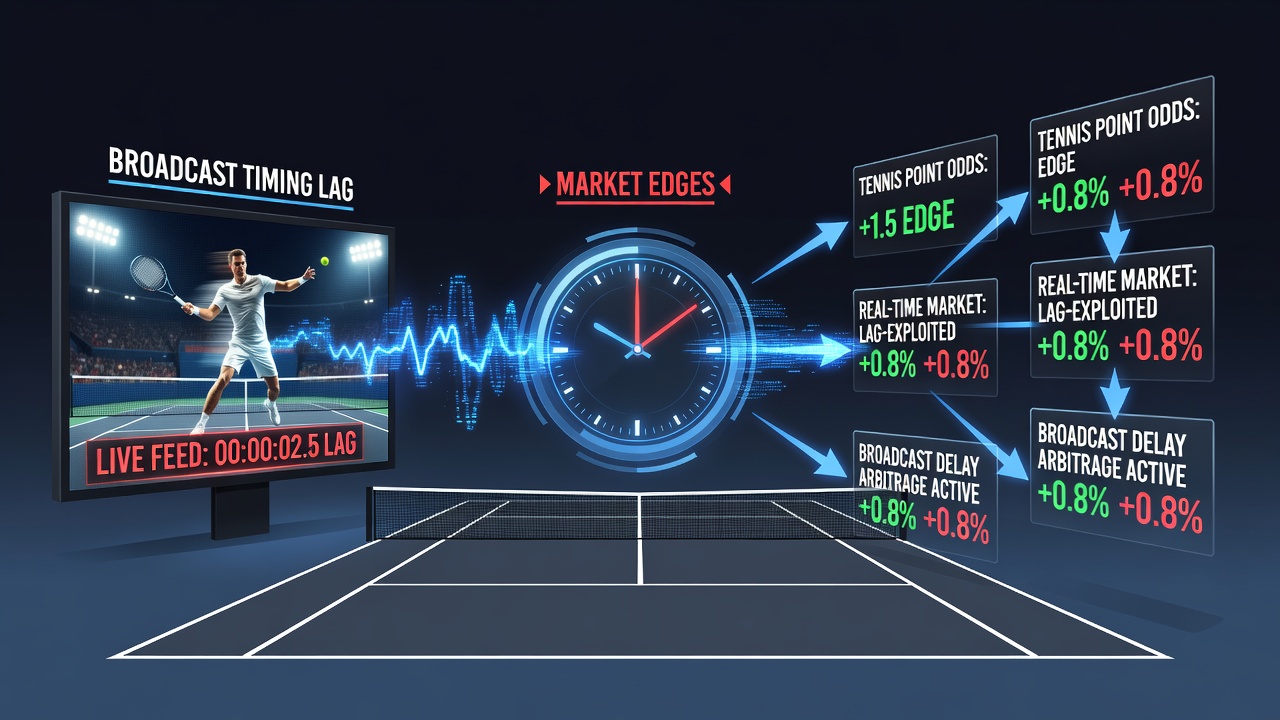
Real-time tennis point markets operate on rapid updates that reflect each point's outcome almost immediately after it concludes, yet broadcast signals traveling through satellite and cable networks introduce consistent delays that range from four to eight seconds in many professional events. These timing differences arise because production teams compress video feeds, apply graphics overlays, and route content through multiple distribution points before it reaches home viewers or standard streaming services. Market makers adjust odds based on the information they receive, which often comes from the same delayed broadcast sources used by most bettors.
Mechanics Behind the Lag
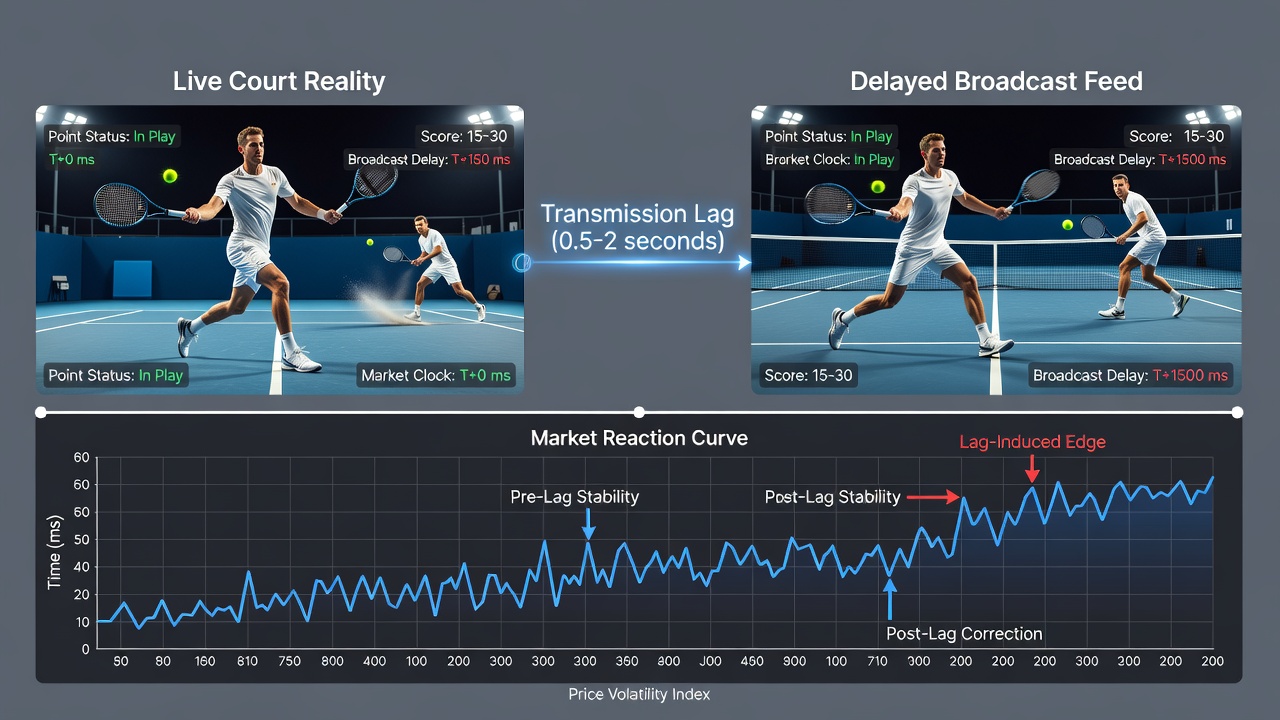
Production workflows at major tournaments include encoding steps that add latency while ensuring high-definition quality and synchronization across international feeds, and data providers who supply live statistics to betting platforms sometimes pull from courtside sensors that operate independently of the television broadcast. When a player wins a point, the actual result registers on those sensors within fractions of a second, but the visual confirmation on delayed screens arrives later. Traders monitoring multiple data streams can therefore identify the outcome and execute wagers on the subsequent point before the broader market incorporates the new information.
During the 2026 US Open swing in September, several matches on outer courts demonstrated measurable differences in update timing between official tournament data feeds and the primary television broadcast, according to reports compiled by the Australian Communications and Media Authority. Observers noted that platforms relying exclusively on broadcast visuals updated point markets an average of 5.2 seconds after the point ended, while those integrated with direct data feeds adjusted within 1.8 seconds.
Market Participant Advantages
Professional syndicates and sophisticated individual traders maintain low-latency connections that bypass standard consumer pathways, allowing them to place bets on the next point winner or total points over/under while the market still prices the line based on the previous outcome. This edge proves most pronounced in matches featuring strong servers or quick points, where the interval between points shrinks to under twenty seconds. The shorter recovery window leaves less time for delayed information to propagate through the system.
Bookmakers that source their tennis data from broadcast partners rather than official tournament APIs experience the same lag, and they frequently widen spreads or pause markets briefly after each point to compensate. Those pauses create additional opportunities for faster participants because the odds remain static while new information becomes available through alternative channels. Research conducted at the University of Nevada's sports analytics program has quantified similar timing discrepancies across multiple Grand Slam events, showing that the average lag correlates directly with the complexity of the broadcast production setup.
Technical Infrastructure Differences
Direct fiber connections from the venue to data centers reduce transmission time compared with satellite uplinks that route signals through multiple hops, and mobile apps that stream compressed video often add further buffering. Bettors who combine venue-adjacent positioning with specialized receivers can capture the score change before it appears on international feeds. This infrastructure gap explains why certain accounts consistently show higher success rates in point-by-point markets during high-profile tournaments where broadcast production intensifies.
Regulatory frameworks in several jurisdictions require operators to disclose the data sources they use for live markets, yet enforcement varies and many platforms continue to accept wagers from users with demonstrably faster access. The pattern repeats across clay, grass, and hard-court surfaces because the underlying broadcast technology remains similar regardless of playing conditions.
Conclusion
Broadcast timing lags persist as a structural feature of tennis point markets because production requirements and distribution networks prioritize visual quality over instantaneous delivery. Participants who secure earlier access to results through direct feeds or venue proximity can act on that information while standard market prices still reflect the prior point. Data from multiple tournaments, including events held in September 2026, confirms that these timing differences create measurable disparities in execution speed and market adjustment rates.